NEXTGEN #03 · Class of 2026
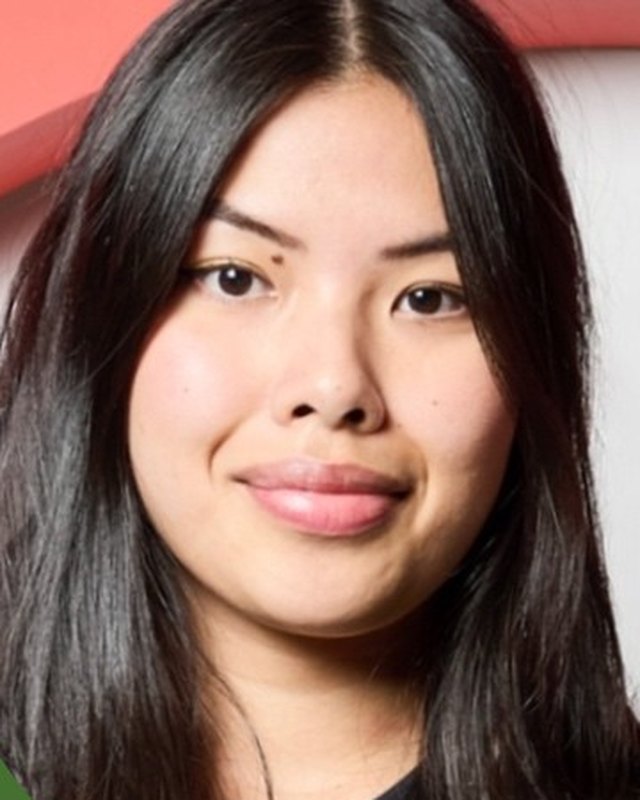
Salomé Klein — CRO & Web Analyst at  CEWE
CEWE
Connect with Salomé“Fewer certainties, more experiments.”
Salomé Klein is CRO & Web Analyst at CEWE. After EM Strasbourg and then BSB Lyon, she discovered UX/UI at business school, then had her turning point at Orange, leading the overhaul of the Datorama project and building dashboards. At the French Red Cross (Croix-Rouge française), she structured the CRO method and trained the teams to make the data reflex part of the internal culture. At CEWE, she learned that running test after test is pointless without a strict framework: no test now goes live without cross-checking quantitative and qualitative data, setting a real hypothesis and going through a prioritisation grid. In this interview, she talks about prioritisation, KPIs, HiPPO culture, AI as a co-pilot, and her conviction: CRO is a team sport.
Salomé at a glance
- Role
- CRO & Web Analyst
- Company
- Sector
- E-commerce
- Expertise
- CRO · Experimentation · Data · UX
- Career path
- Orange → Croix-Rouge française → CEWE
- Conviction
- “CRO without learning isn't CRO.”
01 — Career
How Salomé got into CRO
What was your turning point?
I have a fairly classic business school background, with quite general programmes where you touch a bit of everything, but that's where I discovered UX/UI and the idea of the user journey. The real turning point came during my internship at Orange, thanks to an amazing internship supervisor who put me straight onto big projects. I was entrusted with the overhaul and rollout of the Datorama project: from scoping the business needs to integrating multi-channel data flows (Meta, Search…) and building dashboards. Seeing the direct impact of those analyses on performance and on the user journey is what clicked for me.
Career Path — Salomé's journey in 5 steps
- EducationEM StrasbourgBachelor in International Business
- EducationBSB LyonMaster's in Digital Project Management
- ExperienceOrangeInternship
- ExperienceCroix-Rouge françaiseDigital Analyst & CRO
- ExperienceCEWECRO & Web Analyst
02 — Mindset
The phrase that guides Salomé
“Without data, you're just another person with an opinion.”
It's a reminder to stay humble in the face of certainties and to always give the user the final say.
— Salomé Klein
03 — Method
Salomé's protocol before every test
Summary written by NextGen from the interview, not a method stated as such by Salomé.
- 01
Cross-check the sources
Quantitative and qualitative data (session replays, customer calls, support teams) before any hypothesis.
- 02
Set a real hypothesis
Never a test based only on a feeling or a single metric.
- 03
Prioritise
Run every idea through an ICE-type prioritisation grid to avoid choices driven by gut feeling.
- 04
Learn from every result
A negative test is never a failure: it's data that prevents a bad decision at scale.
“Fewer certainties, more experiments.”
04 — Advice
Salomé's advice for getting started
Your advice to someone who wants to get started?
Don't stay locked inside your numbers.
Go and talk to the support teams, listen to customer calls, watch session replays. Data gives you the lead, but human empathy gives you the solution.
05 — Toolbox
The tools Salomé uses every day
1 tool, and how Salomé uses it, according to the interview. The whole class toolbox →
Air360
Experience Analytics
UX Analytics: qualitative insight and session replays give the why behind points of friction
06 — Read · Watch · Listen
The content Salomé mentions
 Book
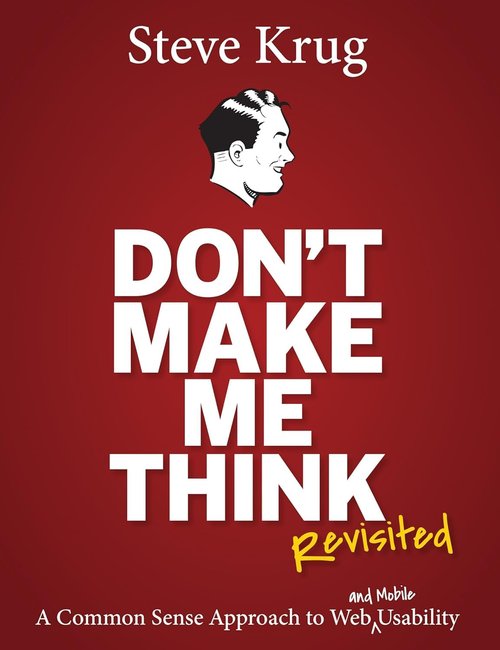
BookDon't Make Me Think
Steve Krug
“I recommend reading “Don't Make Me Think” by Steve Krug, or white papers.”
Recommended
07 — The lesson learned on the job
Why Salomé codes her own A/B tests
What skill did you learn on the job?
Technical implementation (JS / CSS). Coming out of school, I thought I would focus on analysis and strategy. But being able to code my own A/B tests and set up tracking quickly became my biggest lever for autonomy and speed.
08 — Her proudest win
Evangelising CRO at the French Red Cross
Your proudest win?
Without hesitation, evangelising CRO at the French Red Cross. The approach already existed, but my time there helped structure a method. We grew together: I trained myself and I trained the teams to make the data reflex part of the internal culture. Analysing the numbers and isolating points of friction became the norm, thanks to an incredible manager and team. In a different vein, taking part in the migration of Croix-Rouge Compétence onto the main website taught me to lead cross-functionally and to bridge product, marketing, business teams and agencies.
09 — The mistake that taught her the most
Why test volume isn't enough
The mistake that taught you the most?
Early on at CEWE, carried away by my eagerness to do well, I wanted to run as many A/B tests as possible, very fast. The problem: many came out “neutral”, without teaching us anything about our users. I realised that volume was pointless without a strict framework. Today, no test goes live without cross-checking several data sources, setting a real hypothesis and going through a prioritisation grid.
10 — Her biggest surprise
Why our certainties are often wrong
Your biggest surprise since you started in CRO?
Seeing how often our certainties are wrong. We all come in with assumptions about what will work, but the data systematically proves us wrong. That's what makes the job so beautiful: it's neither our intuitions nor the opinions of the various stakeholders that win, it's always the users.
11 — Her definition of CRO
CRO, a tool to get to know your users
What is your definition of CRO?
CRO is above all a fantastic tool for getting to know our users better. Business performance remains the goal, but the real value lies in customer knowledge. A negative test is never a failure: it's valuable data that sharpens our understanding and prevents bad decisions at scale. It's the perfect intersection between UX sensitivity and data rigour.
12 — Her biggest challenge
The challenge of prioritisation
The biggest challenge in CRO?
Prioritisation, clearly. We have dozens of ideas, but isolating the right opportunity amid all the noise is what turns a roadmap you put up with into a profitable strategy. To avoid choices driven by gut feeling, I rely on an ICE-type method and a simple protocol: always cross-check quantitative and qualitative data before validating a hypothesis.
13 — Her stack
Why UX Analytics is essential, according to Salomé
Which tools do you use every day?
My stack is very complete, and AI has become a fantastic tool to speed up UX research and ideation. But the must-have remains a UX Analytics solution: quantitative data tells you what is happening, but qualitative insight and session replays give you the why. It's the only way to isolate the real points of friction and come up with hypotheses that hit the mark.
14 — Her inspirations
Who inspires Salomé
Who inspires you?
I think of all the people I've met throughout my career: my managers, my colleagues and the agency teams. And I have to admit there's a real fit with the experts at Air360! To keep progressing, the watchword is curiosity, especially in digital where everything moves incredibly fast: reading books or white papers, attending webinars and events dedicated to CRO or digital, keeping an active watch on LinkedIn by following the experts in the field.
15 — Her KPIs
The KPIs Salomé watches (and the ones she avoids)
Your favourite KPI, the most overlooked, the most misused?
My favourite is RPV: it measures real value creation, not just a one-off sale. The metric that is too often overlooked is the UX engagement rate (real interactions, qualified scroll), which reveals points of friction very early. And the most misused is still the overall conversion rate: it means nothing without segmenting by source or intent.
16 — The myth to debunk
Why a good conversion rate isn't everything
The myth to debunk?
Believing that a good conversion rate is everything. Optimising one step to push a number up in the short term is easy, but if it destroys customer value or the overall experience, or generates returns, it's a losing game.
17 — The trend that excites her
Generative AI in the service of UX research
The trend that excites you most?
The arrival of generative AI applied to UX research and personalisation. Being able to model behaviour or analyse qualitative data at scale without losing nuance is a real boost that lets us focus on strategy.
18 — E-commerce in 3 years
Towards hyper-personalised, predictive e-commerce
How do you see e-commerce in 3 years?
I see e-commerce becoming even more hyper-personalised and predictive. We'll finally move beyond the classic linear journey: the experience will adapt in real time to the context, the intent and the precise buying behaviour of each user.
19 — What she would change
Quality of hypotheses before volume of tests
If you could change one thing in the industry?
Stop the race for test volume and favour the quality of hypotheses instead. Less “testing for the sake of testing”, more real value delivered to users.
20 — Her secret sauce
Cross-checking quant and qual, every time
Your everyday secret sauce?
Systematically cross-checking quantitative and qualitative data before validating even the smallest hypothesis. I never launch a test based only on a feeling or a single metric. And my most effective hack for progressing fast: analysing other people's failures and my own. Dissecting A/B tests that failed or gave a counter-intuitive result teaches you ten times more about human behaviour than any success story on LinkedIn.
21 — Her hot take
Is a negative test a failure?
Your hot take?
Everyone thinks a negative test is a failure, when it's sometimes the best data of the year. Better to invalidate a bad idea with an A/B test in two weeks than to hurt revenue for six months after a blind rollout.
22 — If she could hit reset
Putting an end to HiPPO culture
If you could hit “reset”?
I would get rid of the “HiPPO” culture (the decision made on the gut feeling of the highest-paid person in the room). I would make every product decision rely on a tested, documented hypothesis.
23 — What nobody dares to say
Doing CRO just to say you do it
What nobody dares to say?
Many companies do CRO to say they do it, without ever giving teams the means or the autonomy to apply the results. Tests pile up, but the real changes get stuck in QA.
24 — Wow or ouch?
The risk of e-commerce looking all the same
Facing the future of digital: wow or ouch?
“Wow” for the speed of innovation, but “ouch” at the risk of standardisation: if everyone uses the same tools and the same recipes, all e-commerce sites will end up looking alike.
25 — What's next?
Where Salomé sees herself in 3 to 5 years
Where do you see yourself in 3 to 5 years?
I see myself at a consulting firm or an agency, supporting a variety of clients and spreading this CRO data culture on a larger scale. I'd like to take on bigger challenges around personalisation and integrating AI to automate UX research. To reach the next level, I'd like to develop my skills in Product Management and global experimentation strategy: structuring complex CRO programmes across an entire organisation, leading cross-functional teams and linking our tests even more directly to financial and business stakes. As for the company, an organisation with a strong product and data culture (or, let's be honest, an ambitious UX Analytics vendor like Air360! 😉).
26 — Open mic
CRO, a team sport
One last word?
CRO is a team sport. You can have the best tech stack and the cleanest data in the world: if you don't bring designers, developers and product teams on board, the insights stay on the shelf. The real victory in CRO isn't just winning an A/B test, it's getting an entire company to ask the right questions, test its hypotheses and put the user experience at the heart of every business decision.
27 — Vision · #NoFilter
Salomé's hot take
AI: are we overdoing it?
Too much hype about magical automation that would replace thinking.
Not enough pragmatic use to get rid of repetitive tasks and free up time for UX analysis. AI remains a co-pilot, not the pilot.
On Salomé's radar
- AI
- Personalisation
- UX research
- Prioritisation
Key takeaways
3 takeaways from Salomé's interview
NextGen summary, based on the interview answers.
- 01
Quality before volume.
Less testing for the sake of testing, more solid, prioritised hypotheses.
- 02
Quant tells you what, qual tells you why.
Cross-checking both is the only way to isolate the real points of friction.
- 03
CRO is a team sport.
Without designers, developers and product teams on board, the insights stay on the shelf.
Salomé's final word
CRO without
Learning
isn't CRO.
— Salomé Klein
See the word wall →Talents & recruiters
Want to talk with Salomé?
Connect with Salomé on LinkedIn to keep the conversation going, share an opportunity or talk CRO and e-commerce.